
The science
Why it works.
Every part of Turvie is based on a method that researchers have studied. Here's each one in plain words, with the evidence behind it and links to the original sources. The health improvements in the app have their own list: all 120 sources.
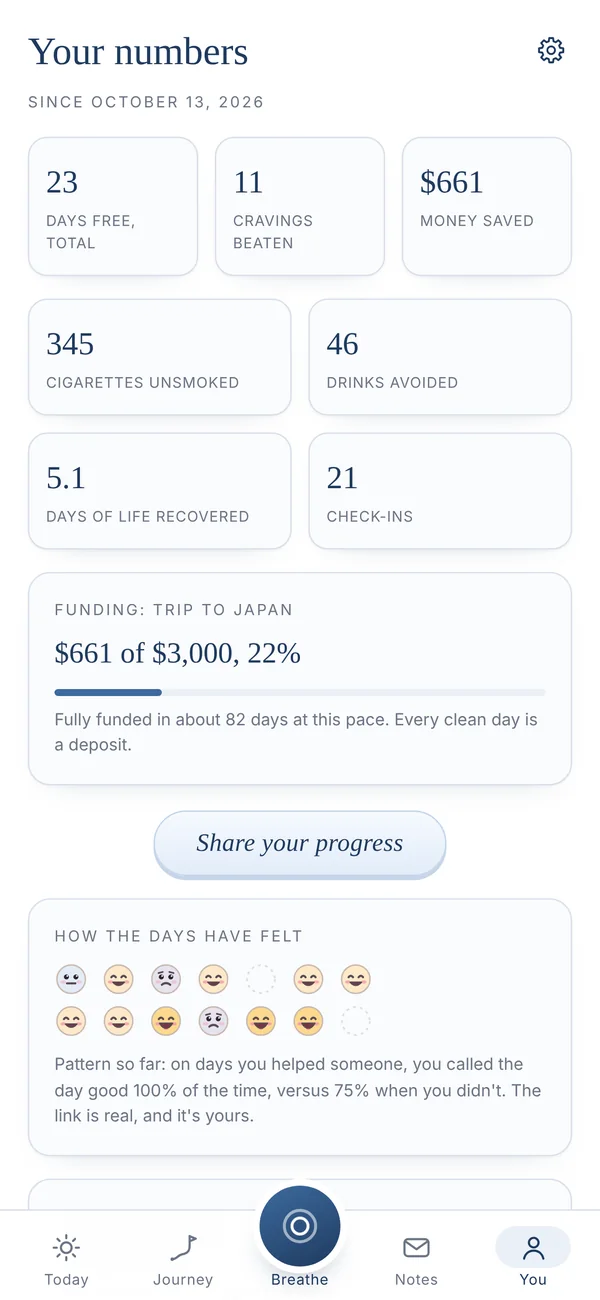
Tracking your progress
Seeing your progress isn't just nice to look at. Checking how you're doing against a goal is one of the most reliable ways people change a habit.
A large review of experiments found that people who were helped to monitor their progress were more likely to reach their goals, and the effect was bigger when progress was physically recorded.
In Turvie: your day count, the nightly check-in and the Journey, where each improvement you reach is marked.
Riding out a craving
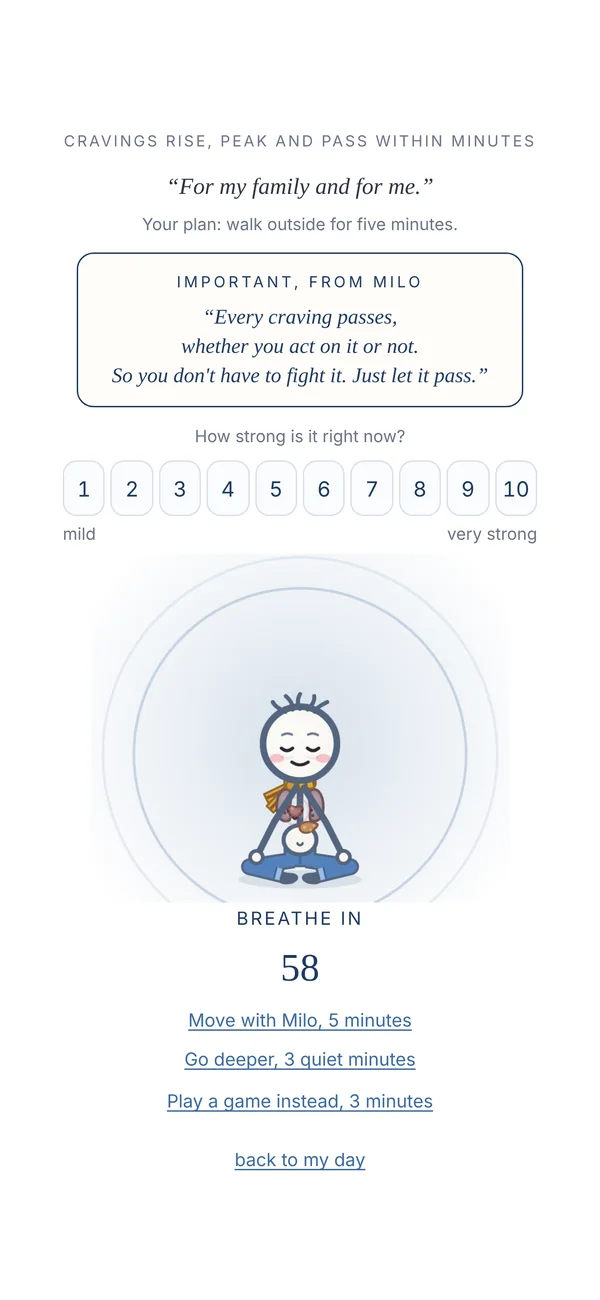
A craving rises, peaks and fades, like a wave. “Urge surfing” means noticing the urge with curiosity and letting it pass, instead of fighting it or giving in. Fighting the thought can backfire: in one study, smokers asked to suppress thoughts of smoking smoked more the following week.
QuitNow notes that a nicotine craving usually lasts three to five minutes. In one randomized trial, smokers taught urge surfing still felt urges, but smoked fewer cigarettes over the next week.
In Turvie: Breathe. Rate the craving, breathe with your friend while they talk you through letting it pass, then see how much it eased.
Moving to shrink a craving
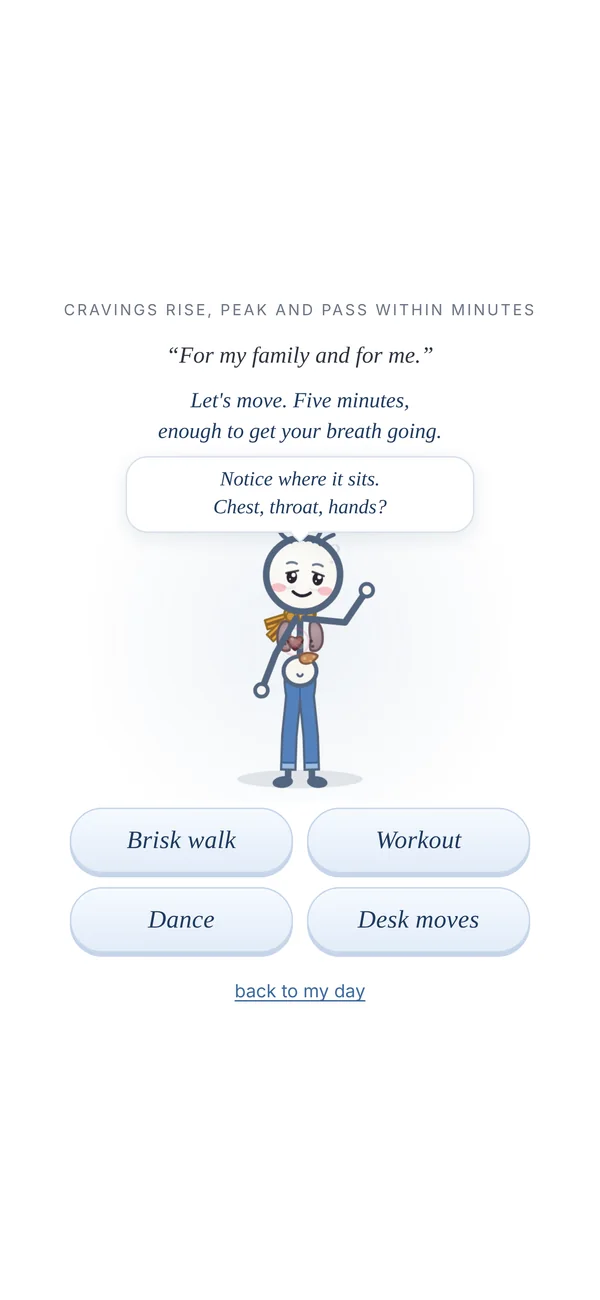
A short burst of activity, like a brisk walk, can take the edge off a craving to smoke right when it hits.
A review that pooled individual results from many lab studies found that short bouts of physical activity reduced cigarette cravings compared with staying still.
In Turvie: Move with your friend, five minutes of a brisk walk, a workout, a dance or desk moves, with your friend doing every move.
Knowing your triggers and planning what to do instead
Habits are tied to cues: a coffee, a drive, a stressful call. Knowing your cues and having a plan for each one is a core part of cognitive behavioural approaches.
In a Cochrane review of digital alcohol programs, the ingredients linked with the biggest drops in drinking were doing something else instead (behaviour substitution) and problem solving. Information about what comes before drinking was also linked with less drinking.
In Turvie: your plan for when a craving hits, what set each craving off, a new way out after a slip, and a heads-up before the day your slips keep landing on.
Choosing a clear quit day
Picking a day and stopping fully on that day gives you a clear line to stand on. Health Canada recommends setting a quit date with enough time to prepare.
In a randomized trial of nearly 700 smokers, people who stopped all at once on a quit day were more likely to still be quit at four weeks and six months than people who cut down gradually first. Both are valid paths, and Health Canada notes you can reduce gradually or stop all at once.
In Turvie: your quit date, today or a day you choose.
Rewards and milestones
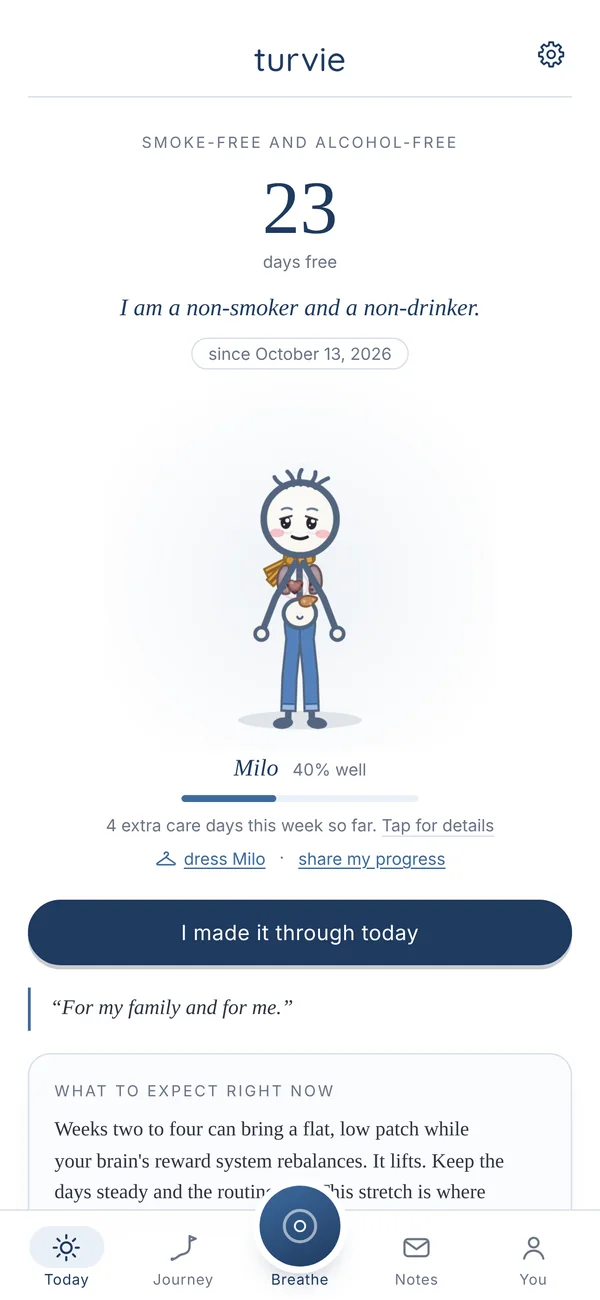
Rewards help. A Cochrane review found that people offered rewards such as cash or vouchers for staying quit were more likely to be quit six months or more later, and the benefit lasted after the rewards stopped.
To be honest about it: those studies used real money and vouchers. Turvie's milestones and money-saved counter are a lighter version of the same idea, and they haven't been tested that way. Health Canada lists saving money as one of the common reasons people quit.
In Turvie: a reward moment for every improvement, ribbons on your friend's wall, a present each month, and the money you keep.

What your body gets back
Knowing what's healing can keep you going. Public health agencies publish timelines of what happens after the last cigarette: heart rate drops within minutes, carbon monoxide levels fall within days, and coughing and shortness of breath ease over months.
For drinking, Canada's Guidance on Alcohol and Health says that not drinking has benefits, such as better health and better sleep, and that risk rises with every drink.
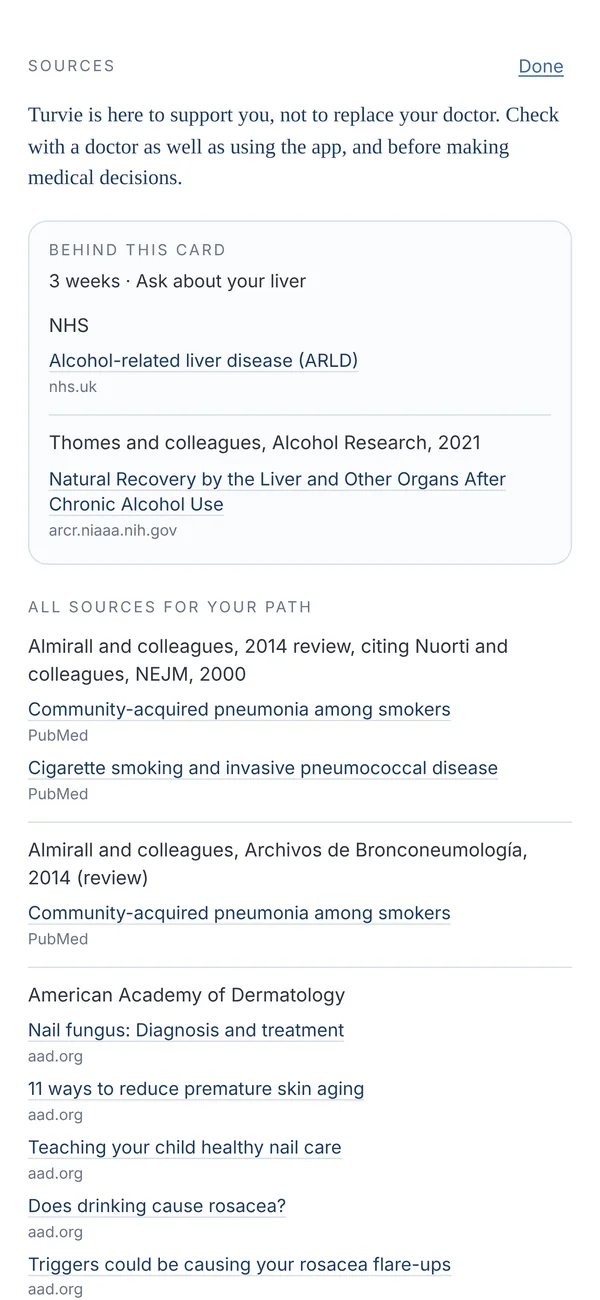
In Turvie: the Journey timeline. Every card shows where it comes from, and every source is listed on the Sources page.
A plan made in advance
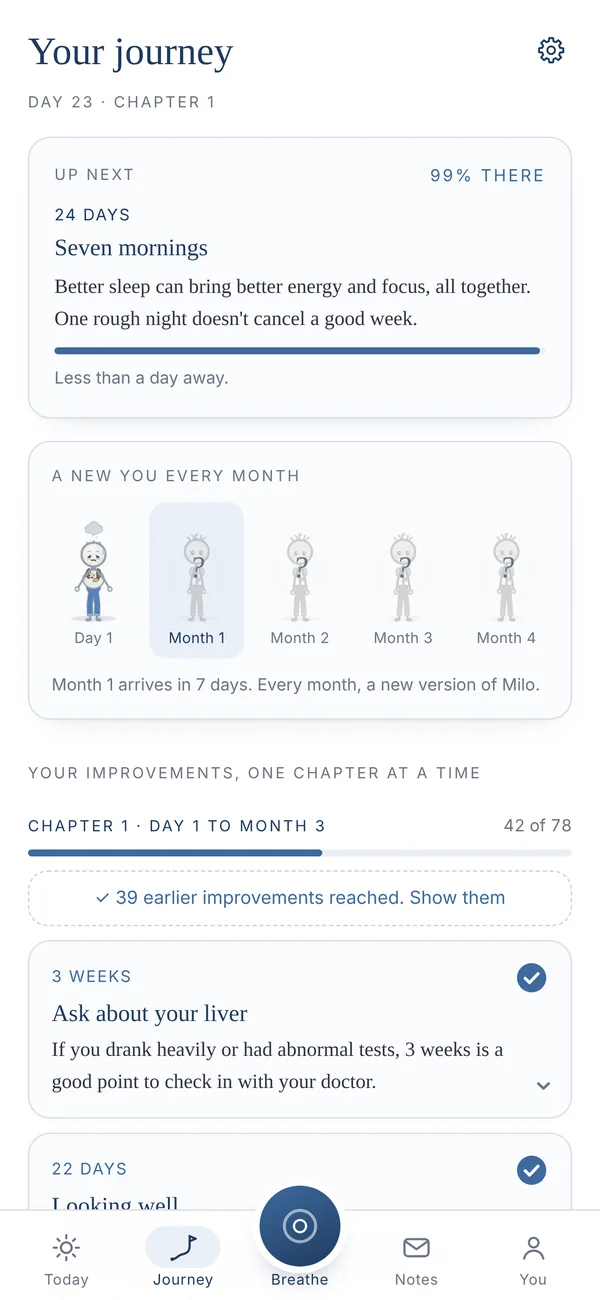
Deciding ahead of time what you’ll do when a craving hits is an if-then plan. Across 12 studies, smokers with a plan like this had about 70% higher odds of quitting.
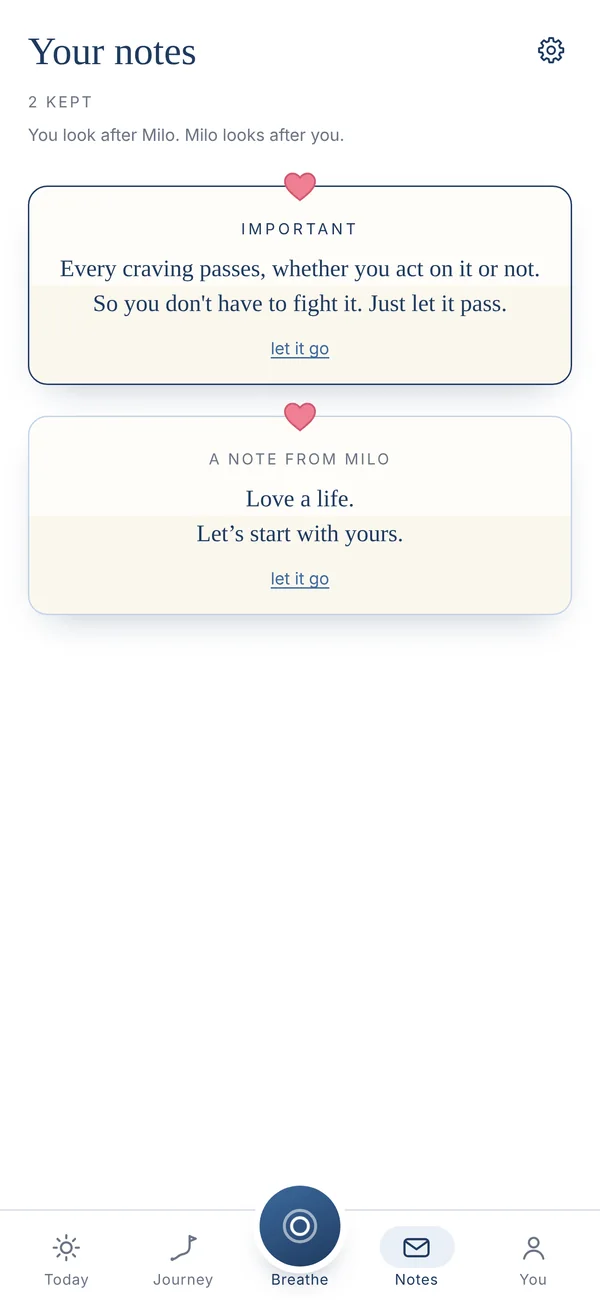
In Turvie: at setup you decide what you’ll do when a craving hits, and that plan sits with you on the Breathe screen.
A friend you look after
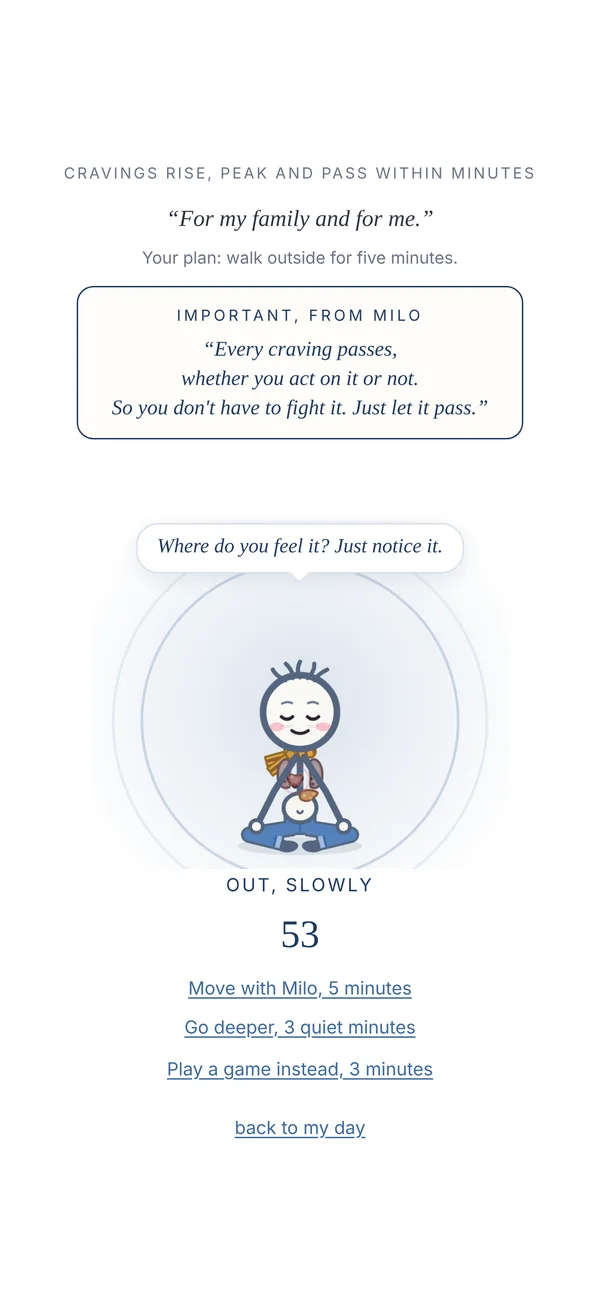
Caring for a character is part of the method. People who customize an avatar stay with a daily program longer, in lab studies of digital self-improvement.
Your friend starts grey, with a rain cloud overhead, carrying what the habit does to a body. Every day you stay free, they recover. The more you look after them, the less you want them hurt.
In Turvie: you choose a companion and a name, then dress them in what they earn as you go.
Slips without shame
Treating a slip as personal failure makes the next one more likely. That pattern is known as the abstinence violation effect.
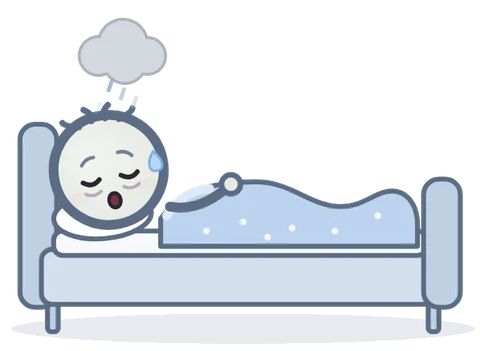
In Turvie: a slip costs your friend half their healing, never all of it, and never a ribbon or an outfit. They spend the day unwell in bed, and one good day brings them back. The next day they help you see what led to it.
A new identity
Ex-smokers who see themselves as non-smokers are more likely to stay quit.
In Turvie: you’re addressed as someone becoming smoke-free, alcohol-free or vape-free, and after a week as a non-smoker, non-drinker or non-vaper.
Support on your phone
Phone-based support can help. A Cochrane review found that automated text-message programs raised quit rates for smoking. For drinking, digital programs reduced how much people drank.
The same review found the evidence for smoking apps on their own is still very uncertain, because few strong trials exist. That's why Turvie is built from methods with their own evidence, and why we encourage using it alongside free services like QuitNow.
In Turvie: the whole app, used with real-world support.
What the research doesn't say
- The evidence for quit-smoking apps on their own is still very uncertain. Methods like rewards, tracking and real-world support have stronger evidence.
- Results are averages across many people. Your path may look different, and slips are a normal part of it.
- Talk to your doctor or pharmacist about quitting, or call a free quitline: QuitNow in BC at 1-877-455-2233, or 1-800-QUIT-NOW in the US.
Please read
Support, not a replacement for your doctor.
Turvie is a support tool, not medical treatment. Turvie is here to support you, not to replace your doctor. Check with a doctor as well as using the app, and before making medical decisions.
If you drink heavily every day, or get shaky or sweaty when a drink is late, talk to a doctor before you stop: alcohol withdrawal can be dangerous. Seizures, hallucinations or severe confusion mean calling emergency services straight away. HealthLink BC on alcohol withdrawal · NIAAA on cutting down or quitting
Canada
- EmergencyCall 9-1-1
- 9-8-8 Suicide Crisis Helpline24 hours, every dayCall or text 9-8-8
- Health Canada quit coachFree help to quit smoking1-866-366-3667
- QuitNow BCFree help to quit smoking or vaping in BC1-877-455-2233
- HealthLink BC, nurses and health advice24 hours, every day. 7-1-1 for the deaf and hard of hearingCall 8-1-1
- BC Alcohol and Drug Information and Referral ServiceInformation and referral, Monday to Friday, 9 am to 5 pm. Lower Mainland 604-660-93821-800-663-1441
United States
- EmergencyCall 911
- 988 Suicide & Crisis Lifeline24 hours, every day, including for substance useCall or text 988
- Your state's quitline1-800-784-86691-800-QUIT-NOW
- SAMHSA National HelplineFree, confidential information and treatment referral, 24 hours1-800-662-4357